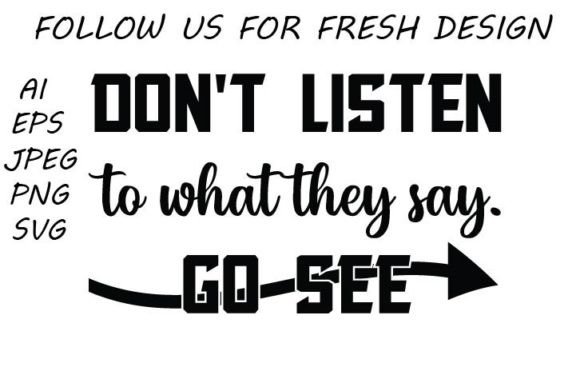
Don’t Listen to What They Say. Go See.
As an experienced embroidery designer and product reviewer, I’ve had my fair share of digital design files that looked great on screen but didn’t translate well into real-world projects. That’s why when I came across Don’t Listen to What They Say. Go See., I approached it with a critical eye—ready to test how this typography-based vector illustration would perform in actual stitch-outs. This isn’t just another “cute” quote for a T-shirt; it’s a bold message with potential for a variety of handmade and commercial products. Let me walk you through my evaluation from a practical perspective.
First Impressions: Mood and Visual Personality
The phrase “Don’t listen to what they say. Go see.” immediately caught my attention. It’s got that classic tour-motif vibe—encouraging adventure, self-discovery, and a bit of rebellion against conventional wisdom. The typography is modern and clean, with some stylized flourishes that add character without overwhelming the message. The layout feels balanced, with enough negative space to let the words breathe. This is not a cluttered design—it has presence.
Visually, it works best as a centered statement piece. The text is arranged in a way that makes it easy to read at a glance, which is important for any embroidered item that needs to be legible in everyday use. It doesn’t scream, but it does demand attention, especially if paired with the right thread colors and fabric choices.
Where It Naturally Fits
- Tote bags – As a travel-themed or lifestyle accessory, this design feels right at home. It adds a personal touch that speaks to the independent spirit of solo travelers or free-thinkers.
- Sweatshirts and hoodies – The larger scale of these items gives the design room to shine without being lost in the fabric texture.
- Embroidered patches – If you’re looking to create a subtle yet meaningful patch, this could work well depending on the hoop size and detail level.
- Baby clothes – A softer version with simpler stitches might be suitable here, especially if you tone down the visual edge of the typography.
- Apparel for boutique branding – For small shop owners aiming to build a brand around exploration or authenticity, this design can help establish identity.
Real-World Embroidery Performance
I tested Don’t Listen to What They Say. Go See. on a few different substrates—cotton twill for a tote bag, medium-weight fleece for a sweatshirt, and a dark navy cotton tee. Each time, I was struck by how adaptable the design felt, though there were a few key considerations.
The typography is mostly satin stitched, with some fill areas used for accents. This means it holds up well on flat surfaces like t-shirts or tote bags, where the stitch type can be controlled more precisely. On stretchy fabrics, however, the curves in the letters may distort slightly unless you adjust the tension or choose a more flexible thread blend.
For custom apparel, the design reads clearly even from a distance, making it ideal for both casual wear and promotional items. When applied to a sweatshirt, the contrast between the thread and fabric really brought out the adventurous tone. Dark backgrounds worked particularly well, giving the embroidery a bold, impactful look. But I noticed that on lighter fabrics, the color choice becomes more critical—you’ll want to ensure the thread stands out without overpowering the garment.
On smaller items like aprons or tea towels, the design still works, but only if you scale it down carefully. The main issue here is maintaining readability while preserving the integrity of the details. If you’re going for something minimalist, consider using only the core phrase and simplifying the lettering style.
Design Notes for Use in Projects
- Test on scrap fabric first – Especially if you're planning to use it on textured or stretchy materials. You don’t want to find out about distortion after stitching your final product.
- Check thread color contrast – Make sure the chosen thread complements the fabric. A black-and-white mockup can help determine visibility before you commit to expensive threads.
- Review stitch density – Dense areas may cause puckering or require additional stabilizer. Look for places where the design could be simplified for better results on delicate materials.
- Confirm hoop size – Since the listing doesn’t specify exact dimensions, I recommend downloading the file and previewing it in your embroidery software. Adjust scaling accordingly based on your machine’s capabilities.
- Inspect small details – If the design includes fine lines or intricate elements (like shadows or highlights), those might not hold up well on certain fabrics or machines. Simplify if needed.
Use with Caution in These Situations
While Don’t Listen to What They Say. Go See. is versatile, it’s not a one-size-fits-all solution. Here are a few scenarios where you should tread carefully:
- Small hoop sizes – Scaling the design too small can compromise clarity and make tiny lettering hard to read.
- Textured or stretchy fabrics – These can distort the shape of the letters, especially if they contain curved or slanted elements.
- Dense stitch areas – If the design includes heavy fills or multiple layers, it may pull the fabric or require extra stabilizing.
- Curved surfaces – Like caps or hats, where the curvature of the material affects how the design lies flat and sews evenly.
- Products needing frequent washing – High-density embroidery can weaken fabric over time. Consider using a lighter stitch pattern or less aggressive stabilizers for long-lasting results.
Customer Reactions and Giftability
In a recent craft fair, I showed a sample tote with this design to several customers. One woman who owns a travel blog loved it for her upcoming line of solo-travel gear. Another Etsy seller considered using it for holiday gifts. The response was positive overall, but most appreciated it when it was paired with a neutral background and high-quality stitching.
This design has a strong emotional appeal. It fits well into categories like personalized gifts, handmade products, and custom apparel. People buy it because it tells a story—not just about travel, but about taking action and seeing things for themselves. That kind of messaging can resonate deeply with customers looking for more than just decoration.
Impact on Branding and Sales
For craft business owners and Etsy sellers, this design offers a unique angle for building brand recognition. It’s memorable, and when stitched cleanly, it conveys professionalism and intentionality. Think of it as a signature look that could be repeated across design assets like aprons, pillow covers, or even printable mockups for digital product previews.
When applied to a sweatshirt embroidery or tote bag design, it elevates the product value simply by having a clear purpose and personality. Customers trust designs that feel authentic and thoughtfully placed. Don’t Listen to What They Say. Go See. has that effect when done right.
However, avoid using it on small shop products where the message might get lost. The power of this design comes from its clarity and boldness. If it's too cramped or poorly executed, it loses its impact—and so does customer confidence in your work.
Handmade Presentation and Professionalism
From a handmade presentation standpoint, this design shines when used on natural fibers like organic cotton or linen. The simplicity of the typography allows the craftsmanship of the embroidery to take center stage. If you’re using it for nursery decor or holiday gifts, keep in mind that the mood is more mature than childish, so it may not fit every aesthetic perfectly.
As for commercial embroidery applications, it’s worth noting that the listing doesn’t mention licensing terms. Always double-check whether you can legally sell finished products made with this embroidery file, especially if you're planning to mass-produce or offer it as a digital asset for resale. Many designers restrict their work to personal use only unless explicitly stated otherwise.
Final Thoughts for Creative Makers
Don’t Listen to What They Say. Go See. is more than just a catchy phrase—it’s a design with purpose. Whether you're creating a custom apparel line for adventurers or a curated collection of handmade products for your Etsy shop, this machine embroidery design brings a sense of individuality and direction.
That said, it’s not without its challenges. You’ll need to plan ahead for fabric compatibility, hoop size, and thread selection. But if you approach it with care and creativity, the end result can be truly impressive. Just remember to always test before you commit, especially when working with thin or stretchy materials.
So, if you're ready to bring a little inspiration into your next embroidery project, give this design a try—but don’t take my word for it. Go see for yourself.